OPPO Find X9s
A technically ambitious smartphone built around a large AMOLED display, a powerful Dimensity platform, a versatile stabilized camera system, broad 5G connectivity, and unusually substantial battery capacity in a slim chassis.
Quick facts
Summary
Basic details and key specifications, selected for the product type.
- Brand
- OPPO
- Product type
- Smartphone
- Updated
- Display size
- 6.59 in
- Refresh rate
- 120 Hz
- Weight
- 202 g
- Profile height
- 156.98 mm
- Profile thickness
- 7.99 mm
- Processor manufacturing process
- 3 nm
- GPU
- Immortalis-G925
- RAM
- 12 GB
- Storage
- 512 GB
- Battery capacity
- 7025 mAh
- Camera resolution
- 50 MP
- Main camera aperture
- f/1.8
- Optical zoom
- 3 x
- 5G bands
- N1, N2, N3, N5, N7, N8, N12, N20, N26, N28, N38, N40, N41, N48, N66, N75, N77, N78
- Bluetooth version
- 6.1
- Operating system
- Android 16
Article
Detailed OPPO Find X9s review
Positioning and overall approach
The OPPO Find X9s is a smartphone designed around the idea that a high-end daily device should not force a choice between screen quality, camera flexibility, endurance, and processing headroom. Its specification combines a 6.59-inch AMOLED panel, an octa-core MediaTek Dimensity 9500s platform, three rear 50 MP cameras, and a 7,025 mAh silicon-carbon battery. Those elements are not isolated headline features: together, they define how the phone is meant to behave through a full day of communication, navigation, photography, video, entertainment, and demanding applications.
At 156.98 by 73.93 mm and 7.99 mm thick, with a weight of 202 g, the device occupies the familiar territory of a substantial contemporary smartphone without becoming unusually thick in order to accommodate its battery. The front is protected by Corning Gorilla Glass 7i, while the structure uses an aluminium frame described as aerospace-grade. This pairing places visual surface protection and structural rigidity at the center of the physical design. Glass provides the uninterrupted feel expected from a modern touch interface, and metal gives the perimeter a more rigid foundation for the controls, antennas, and internal assembly.
The result is a product whose appeal is best understood as an integrated platform rather than a collection of isolated extremes. The display is designed for frequent viewing indoors and outside, the cameras cover three meaningfully different perspectives, the processor separates short bursts of speed from broader everyday efficiency, and the battery capacity changes the assumptions around how often the device needs to return to a cable. Its hardware therefore addresses the ordinary transitions of mobile use: from a bright street to a dim room, from a wide scene to a distant subject, or from a quick message to a sustained video task.
Display as the primary interface
The 6.59-inch AMOLED display has a resolution of 1256 by 2760 pixels and a density of 460 pixels per inch. At this density, individual pixels are sufficiently closely packed that text, interface lines, photographs, and video detail can appear finely defined at typical handheld viewing distances. Resolution alone does not determine readability, but it establishes the canvas on which font rendering and visual media are presented. The screen occupies approximately 91% of the front surface, giving the device a predominantly display-led character while retaining the borders required to house the panel and its protective layers.
AMOLED refers to a display technology in which pixels emit their own light. In practical use, that allows dark areas of an image to be rendered without relying on a permanently illuminated backlight, and it supports precise local control over contrast. This is particularly relevant for dark interfaces, subtitles over video, and scenes containing bright highlights next to shadow. The panel also supports Dolby Vision, a high dynamic range format that carries scene-by-scene image information. When appropriate Dolby Vision material is being viewed, the aim is not simply a brighter picture, but a more controlled relationship between highlights, mid-tones, and darker detail.
A 120 Hz refresh rate affects how frequently the panel can update the image. Compared with a conventional 60 Hz screen, it can make scrolling, interface motion, and supported animation look more continuous because the visual state is refreshed more often. Its value is most immediately visible in small, repeated interactions: reading long pages, moving through image galleries, navigating maps, or switching between app views. It does not make every item of content intrinsically sharper, but it improves the temporal smoothness of elements that can take advantage of the higher update rate.
Brightness and low-light behavior
The display is rated at 800 nits of typical brightness, 1,800 nits in High Brightness Mode, and a peak of 3,600 nits. These figures describe different conditions rather than one permanent operating level. Typical brightness is the more useful reference for normal sustained viewing. High Brightness Mode is intended to reinforce legibility under strong ambient light, while the peak figure relates to concentrated highlights and compatible high dynamic range material. In daily terms, this structure gives the screen resources for outdoor visibility without treating maximum output as the normal state of the panel.
The panel uses 3,840 Hz PWM, or pulse-width modulation, for brightness control. PWM regulates apparent luminance by rapidly varying the time for which pixels are illuminated. A high modulation frequency is relevant because the light pulses occur at a rate far beyond the ordinary cadence of interface animation. The specification describes the method through which lower display brightness can be managed; it should be understood as part of the panel’s brightness-control architecture rather than as a replacement for the other factors that affect visual comfort, such as room illumination, content contrast, and chosen brightness level.
Corning Gorilla Glass 7i protects the face of this display, so the viewing surface is not treated as separate from the phone’s structural considerations. Protection does not mean the screen is invulnerable to impact or abrasion, but it is an important component of a device that places so much of its function on a single expansive front panel. The combination of an AMOLED surface, high pixel density, high refresh capability, and variable brightness places visual interaction among the central strengths of the design.

Processing architecture and memory behavior
At the center of the phone is the MediaTek Dimensity 9500s, manufactured on a 3 nm process. Process-node terminology refers to the scale associated with semiconductor fabrication; in a phone, the practical importance is that it provides a foundation for integrating substantial processing capability within a constrained power and thermal envelope. The chipset is paired with 12 GB of LPDDR5X RAM and UFS 4.1 storage. This combination matters because mobile responsiveness depends not only on the main processor but also on how quickly active data can remain available in memory and how efficiently applications, media, and files can be read from storage.
The CPU uses eight cores arranged for different types of work: one Cortex-X925 core reaching 3.73 GHz, three Cortex-X4 cores at 3 GHz, and four Cortex-A720 cores at 2.4 GHz. This is a heterogeneous design. The single high-performance core can address short, intensive demands, while the additional performance cores support heavier multi-threaded activity and the efficiency-oriented group handles a broader range of routine background and foreground tasks. Instead of assuming that every task deserves the same amount of energy, the architecture can direct work toward an appropriate class of core.
In practice, this arrangement is relevant when multiple activities overlap. A navigation session may continue tracking location while messages arrive, audio plays, images are processed, and the display remains active. Editing video, exporting images, playing graphically demanding games, and moving between several large applications similarly draw on several parts of the platform at once. The Immortalis-G925 GPU is the graphics processor responsible for rendering visual workloads, including the real-time composition of games and interface effects. It complements the 120 Hz panel by providing the graphical throughput needed by applications that are able to render at elevated frame rates.
LPDDR5X is a modern low-power memory technology. Its role is to hold the active working set used by the operating system and applications, allowing the phone to keep more activity close at hand instead of repeatedly retrieving it from longer-term storage. UFS 4.1, meanwhile, is the storage interface behind app installation, file access, recording, and media libraries. The 512 GB internal storage allocation gives the device a substantial local workspace for photography, 4K video, offline media, and applications. There is no memory-card slot, so internal storage is the fixed basis for local capacity planning.
Software longevity and interaction
The software environment is Android 16 with ColorOS 16. Android supplies the underlying application and system platform, while ColorOS is the interface layer shaping system presentation and interaction. The stated commitment of four major operating-system updates and five years of security updates is significant in a device intended for prolonged use. Major system updates concern the evolution of platform capabilities and interface behavior; security updates concentrate on maintaining protection against identified software vulnerabilities over time.
A programmable Snap Key adds a physical point of interaction beyond the standard buttons. The significance of a configurable control is not that it adds another feature in isolation, but that it can reduce the steps needed to reach a recurring action. A physical input can be located by touch and used without first navigating through a visual menu. The under-display ultrasonic fingerprint sensor follows a similar principle of direct access. Ultrasonic sensing uses sound waves to build a detailed reading of the fingerprint through the display area, integrating biometric authentication into the front surface rather than requiring a separate visible sensor.
Battery, charging, and the logic of endurance
The 7,025 mAh battery is one of the defining specifications of the Find X9s. Battery capacity is measured in milliampere-hours, a figure that indicates the quantity of electrical charge the battery can hold, not a guaranteed number of hours of use. Actual endurance varies with display brightness, cellular conditions, camera activity, app behavior, navigation, graphics demand, and temperature. Even so, a capacity at this level changes the underlying energy reserve available to the device, especially when paired with a 3 nm processing platform intended to manage performance efficiently.
The battery uses silicon-carbon chemistry. In broad terms, silicon-carbon battery technology is associated with increasing energy density relative to more conventional graphite-based anode approaches. Its importance here is architectural: it helps explain how a large battery can be integrated within a handset that remains under 8 mm thick. Capacity and device thickness are often in tension, because storing more energy usually demands more internal volume. This design addresses that tension through battery chemistry as well as through physical layout.
Wired charging is rated at up to 80 W. The device also supports USB Power Delivery at 13.5 W and Programmable Power Supply, or PPS, at 55 W. These are charging communication standards: the phone and power source negotiate suitable voltage and current rather than treating every USB connection as identical. PPS is particularly useful because it can adjust charging parameters in fine increments, while USB PD establishes a broadly used framework for compatible wired power delivery. The distinct figures reflect the fact that charging behavior depends on the protocol shared by the connected power source and the phone, rather than being reducible to a single number in every circumstance.
The USB Type-C connector also supports USB On-The-Go, commonly called OTG. OTG permits the phone to act as a host for compatible USB peripherals, broadening the port’s role beyond charging and computer connection. This can be relevant to direct file handling or the use of external accessories. There is no 3.5 mm headphone jack, so wired audio does not have a dedicated analogue socket. The device includes a loudspeaker for integrated audio output, while Bluetooth 6.1 provides a current-generation wireless connection path for compatible audio devices and other peripherals.

Three focal lengths, one photographic system
The rear camera arrangement is organized around three 50 MP cameras: a main wide-angle camera, an ultra-wide camera, and a telephoto camera. Equal resolution across these three viewpoints is meaningful because the system is not built around a single detailed primary lens with markedly less capable supporting perspectives. The roles remain different, however. Lens angle, aperture, sensor size, focusing distance, optical stabilization, and image processing all influence the final result. Megapixel figures describe image dimensions, but they do not independently define low-light performance, dynamic range, motion handling, or the visual character of a photograph.
The primary camera uses a 24 mm equivalent wide-angle lens with an f/1.8 aperture, a 1/1.56-inch sensor, and optical image stabilization, or OIS. A 24 mm field of view is a versatile general-purpose perspective: broad enough for environmental scenes, architecture, groups, and everyday context, while remaining suitable for ordinary subjects without the strong spatial exaggeration associated with an ultra-wide lens. The f/1.8 aperture allows more light to reach the sensor than a narrower aperture would under otherwise identical conditions. The relatively large 1/1.56-inch sensor designation is relevant because sensor area influences light-gathering potential and the basis for image detail.
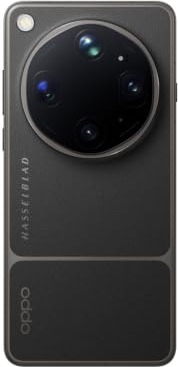
OIS physically compensates for small involuntary movements of the phone during capture. It is especially useful for still photography in lower light, where longer exposures can be necessary, and for video, where hand movement can otherwise appear as persistent shake. Stabilization cannot stop a moving subject, and it cannot substitute for adequate lighting, but it can improve the odds of a steady capture when the motion comes from the person holding the device. The camera system also carries Hasselblad tuning, a designation referring to its photographic image rendering and color-tuning approach.
Ultra-wide context and telephoto reach
The 15 mm ultra-wide camera has a 120-degree field of view and an f/2.0 aperture. Its purpose is not merely to place more objects in a frame. A genuinely wide perspective changes the relationship between foreground and background, making it useful for interior spaces, large buildings, landscapes, groups, and scenes in which the viewer should feel close to the immediate subject while still seeing the surrounding context. The trade-off is that a 15 mm view creates a more pronounced sense of perspective than the main camera, especially toward the edges. Choosing this camera is therefore a compositional decision as much as a matter of fitting more into the image.
The 73 mm telephoto camera provides 3x optical zoom, an f/2.6 aperture, and OIS. Optical zoom in this context means that the lens provides a narrower native field of view through its physical optics, rather than relying solely on cropping a central section from another camera’s image. A 73 mm equivalent perspective is well suited to portraits, distant architectural details, performances, sports viewed from a modest distance, and subjects that benefit from visual separation from their background. It also provides a more compressed-looking relationship between near and far elements than the main camera, an effect that can be aesthetically useful even when distance is not the only reason to choose it.
Seen together, the 15 mm, 24 mm, and 73 mm focal lengths form a coherent photographic vocabulary. The ultra-wide lens establishes place, the main camera handles broad everyday observation, and the telephoto lens selects and isolates. Moving among them is not simply a matter of magnifying an image; it changes perspective and therefore changes the story a frame tells. This is the more useful way to understand a multi-camera smartphone system: its cameras are distinct visual instruments intended for different choices in framing.
Video capture and front-facing communication
The rear cameras record up to 2160p video at 30, 60, or 120 frames per second, while 1080p capture extends to 240 frames per second. The term 2160p is commonly known as 4K and refers to a high-resolution video format that preserves substantial spatial detail. Frame rate determines how many individual frames are recorded each second. At 30 frames per second, video follows a familiar general-purpose motion cadence; 60 frames per second can render movement with greater temporal detail; and 120 frames per second creates material that can be played back more slowly for a clear slow-motion effect. Full HD at 240 frames per second provides an even higher-speed option where motion analysis or dramatic slowdown matters more than 4K resolution.
Rear video combines OIS with gyro-EIS. Electronic image stabilization uses motion information from the device’s gyroscope and applies digital correction to reduce visible shake. Where optical stabilization addresses movement at the lens or sensor assembly, gyro-based electronic stabilization addresses motion through image processing. Their combination is relevant during handheld walking shots, quick reframing, and informal capture, where no external stabilizing equipment is present. The rear system also supports Dolby Vision HDR video, extending the display’s high dynamic range capability into capture as well as playback.
The front camera has a 32 MP resolution, a 21 mm focal length, and an f/2.4 aperture. Its 21 mm view is relatively broad, which is useful when framing an individual at arm’s length while retaining more of the surroundings. It records 2160p video at 30 or 60 frames per second and 1080p video at 30 or 60 frames per second, with gyro-EIS support. This gives front-facing communication and self-recorded video a high-resolution option rather than reserving 4K solely for the rear system. The broader point is consistency: both sides of the device are equipped for video use that can exceed the basic expectations of casual calling.

Connectivity, location, and everyday utility
Cellular support spans GSM, HSPA, LTE, and 5G, with 5G operating in both SA and NSA modes. Standalone 5G uses a 5G core network, while non-standalone 5G can use 5G radio access alongside established LTE infrastructure. The supported bands include a broad range across the older and newer network generations, including 5G n1, n2, n3, n5, n7, n8, n12, n20, n26, n28, n38, n40, n41, n48, n66, n75, n77, and n78. Band support is important because mobile networks use different radio frequencies in different regions and for different coverage goals. A broad set improves the technical basis for connection across varied network deployments.
The device supports two Nano-SIM profiles plus eSIM, with a maximum of two active lines. An eSIM is an embedded subscriber identity module that can be provisioned digitally instead of inserted as a physical card. Its practical role is flexibility in managing mobile identities while retaining the option of physical Nano-SIM cards. Wi-Fi 7 adds a current wireless local-network standard, while Bluetooth 6.1 covers nearby accessory connections. Together with USB Type-C and NFC, these interfaces make the phone a point of contact between mobile networks, local networks, accessories, and compatible contactless interactions.
NFC, or Near Field Communication, is a short-range radio technology intended for interactions at very close distance. Its value lies in immediacy: the phone can exchange limited information with a compatible nearby terminal or tag without establishing a conventional long-range network connection. An infrared port adds another direct-control tool, allowing the handset to communicate with compatible infrared-operated equipment. These modest features are easy to overlook beside 5G and Wi-Fi 7, but they speak to a broader interpretation of a smartphone as a practical control and identity device as well as a communications device.
Location capability is unusually extensive, with GPS on L1 and L5, Galileo on E1, E5a, and E5b, QZSS on L1 and L5, BeiDou on B1I, B1C, B2a, and B2b, GLONASS, and NavIC on L5. Multiple constellations give the device access to more satellites and signals than a single-system receiver. Dual-frequency operation on selected systems can help distinguish direct satellite signals from reflected signals in challenging environments. For maps, route guidance, outdoor activity tracking, and place-aware photography, this multi-system approach gives the positioning hardware a broad technical foundation.
Protection, sensors, and physical resilience
The Find X9s carries IP66, IP68, and IP69 protection ratings. The IP system distinguishes resistance to solids from resistance to water, and the combination here describes a wide environmental protection profile. It includes resistance to high-pressure water jets and immersion to a depth of up to 1.5 metres for 30 minutes. These ratings are relevant to accidental exposure in daily life, such as rain, splashes, dusty environments, or a brief immersion within the stated conditions. They describe controlled resistance limits, not an invitation to treat the phone as a purpose-built underwater device.
The sensor set includes an accelerometer, gyroscope, compass, proximity sensor, and the ultrasonic fingerprint reader. The accelerometer detects changes in movement and orientation, enabling familiar actions such as screen rotation and activity sensing. The gyroscope provides more detailed rotational motion data, which is valuable to stabilization and spatially sensitive applications. The compass supports directional awareness, the proximity sensor helps the device recognize when it is near the face, and biometric sensing provides a direct authentication method. These parts rarely define the product individually, but they allow its hardware and software to respond more naturally to movement, position, touch, and context.
Physical resilience is consequently distributed across several layers: Gorilla Glass 7i at the front, an aluminium frame around the device, sealing reflected in the IP ratings, and software-supported sensors that manage the screen and motion-sensitive functions. This is a more complete picture than treating durability as a single number. A phone is carried, placed on surfaces, used outside, and handled while moving; the materials, seals, interface layout, and sensor behavior all contribute to how it accommodates that reality.
Technical assessment
Technically, the OPPO Find X9s is a cohesive premium smartphone whose most notable decisions reinforce one another. The large, high-density 120 Hz AMOLED display is supported by brightness figures suited to varied lighting and by Dolby Vision capability. The Dimensity 9500s, LPDDR5X memory, UFS 4.1 storage, and Immortalis-G925 graphics processor provide a platform designed for both demanding bursts and sustained mixed workloads. Its battery capacity is substantial for a chassis under 8 mm thick, and silicon-carbon chemistry is central to reconciling those two physical characteristics.
The camera system is also logically structured rather than numerically repetitive: the 24 mm stabilized main camera, 15 mm ultra-wide camera, and 73 mm stabilized telephoto camera give three distinct ways to frame a subject. Rear 4K recording up to 120 frames per second, Dolby Vision HDR, optical stabilization, and gyro-EIS extend that flexibility into video, while the 32 MP front camera maintains strong recording options for front-facing use. Broad cellular band support, SA and NSA 5G, Wi-Fi 7, Bluetooth 6.1, NFC, infrared control, and multi-constellation positioning complete a connectivity package intended for international and location-aware mobile use.
There are clear design boundaries alongside these strengths. Local storage is fixed because there is no memory-card slot, and wired audio lacks a dedicated 3.5 mm connection. Charging capability also depends on the protocol negotiated with the connected USB power source, so the highest wired rating and standardized PPS or USB PD behavior should be understood as different operating paths. Within those parameters, the hardware presents a balanced technical proposition: strong visual output, flexible imaging, modern processing, comprehensive connectivity, and environmental protection are treated as interconnected elements of one durable daily-use device.
Evidence-backed content
Sources consulted for OPPO Find X9s
Documents supporting the information published in this article.
- OPPO Find X9s - Specifications | OPPO Global www.oppo.com/en/smartphones/series-find-x/find-x9s/specs/
- Oppo Find X9s Dual-SIM 512GB ROM + 12GB de RAM (solo GSM) Smartphone 5G libre de fábrica (gris medianoche) - Versión internacional www.amazon.es/dp/B0H9S34KCW?tag=kaicus-21&linkCode=osi&th=1&psc=1
- OPPO Find X9s | 512 GB | 12 GB RAM | Gris | Versión Global Desbloqueado E-Sim NFC www.ebay.es/itm/800048436397?_skw=OPPO+Find+X9s&hash=itemba469a54ad:g:eZ...
- (Nuevo) Teléfono Móvil OPPO Find X9S 5G 12GB+512GB GRIS Doble SIM Global Android www.ebay.es/itm/147322158251?_skw=OPPO+Find+X9s&hash=item224d15bcab:g:Tw...
- OPPO Find X9s 12 GB 256 GB Dimensión 9500s 50 MP Global eSIM NFC Gris Medianoche - NUEVO www.ebay.es/itm/137343997926?_skw=OPPO+Find+X9s&hash=item1ffa5717e6:g:Un...
- Oppo Find X9S 5G Smartphone 6.59" AMOLED Dual SIM Neuf www.ebay.es/itm/298564201640?_skw=OPPO+Find+X9s&hash=item4583d02ca8:g:CE...
- Oppo Find X9S 5G Smartphone 6.59" AMOLED Dual SIM Neuf www.ebay.es/itm/298564201640?_skw=OPPO+Find+X9s&hash=item4583d02ca8:g:CE...
- Oppo Find X9s 5G (12GB RAM 256GB Naranja) Dimensión 9500s eSim NFC Versión... www.ebay.es/itm/188654830826?_skw=OPPO+Find+X9s&hash=item2becb444ea:g:lt...
- Oppo Find X9s 5G (12GB RAM 256GB Gris) Dimensión 9500s eSim NFC Versión Global www.ebay.es/itm/178319320463?_skw=OPPO+Find+X9s&hash=item2984a8e58f:g:N0...
- Oppo Find X9s 5G (12GB RAM 512GB Sky) Dimensión 9500s eSim NFC Versión Global www.ebay.es/itm/188655495887?_skw=OPPO+Find+X9s&hash=item2becbe6acf:g:gS...
- OPPO Find X9s 12 GB 256 GB Dimensión 9500s 50 MP Global eSIM NFC Atardecer Naranja- NUEVO www.ebay.es/itm/137343978750?_skw=OPPO+Find+X9s&hash=item1ffa56ccfe:g:bb...
- (Nuevo) Teléfono Móvil OPPO Find X9S 5G 12GB+512GB NARANJA Doble SIM Global Android www.ebay.es/itm/147322160689?_skw=OPPO+Find+X9s&hash=item224d15c631:g:4x...
- (Nuevo) OPPO Find X9S 5G 12GB+512GB LAVANDA Doble SIM Global Android Teléfono Móvil www.ebay.es/itm/147322159634?_skw=OPPO+Find+X9s&hash=item224d15c212:g:hP...
- Oppo Find X9s - Full phone specifications www.gsmarena.com/oppo_find_x9s_5g-14617.php
- Oppo Find X9s Price, Specs and Features - fonezone.me fonezone.me/ar/blogs/news/oppo-find-x9s
- Kataloga prece / kompakta izdruka - EestiPoisid eestipoisid.eu/nutitelefonid-apple/telefonid-nutitelefonid/mobiiltelefon...
- Oppo Find X9s 5G Dual SIM 512GB 12GB RAM - MobileShop.eu www.mobileshop.eu/lv/specifik%C4%81cijas-pdf/87be87745fed9aed0ce8d8ad736...
- Kataloga preču saraksts / kompakta izdruka - EestiPoisid eestipoisid.eu/telefonid-nutitelefonid/1593/6/c?sort=pd.name&order=DESC&...
- Ficha técnica do Oppo Find X9s global vaza na íntegra com bateria ... www.tudocelular.com/rumores/noticias/n248371/oppo-find-x9s-global-ficha-...
- OPPO Find X9s global terá bateria de 7.025 mAh e bordas de ... www.tudocelular.com/curiosidade/noticias/n252275/oppo-find-x9s-global-ba...
- Oppo Find X9s Leak: 7.025 mAh Akku & 50 MP Triple-Kamera www.allround-pc.com/news/oppo-find-x9s-leak-guenstiges-flaggschiff-mit-r...
- Oppo Find X9s / Find X9s Pro für globalen und chinesischen Markt ... www.chinamobilemag.de/vorstellung/oppo-find-x9s-und-find-x9s-pro-launch....
- OPPO Find X9s ab 1067,49 € (August 2026) - Idealo www.idealo.de/preisvergleich/OffersOfProduct/212635431_-find-x9s-oppo.ht...
- Oppo Find X9s (256GB 12GB - SUNSET ORANGE - GLOBAL) techwarehouse.co.za/products/oppo-find-x9s-256gb-12gb-sunset-orange-glob...
- OPPO Find X9s | 12GB RAM | Global Version Unlocked eSIM NFC www.ebay.com/itm/188406899848
- Honor Magic8 Pro (512 Go, Noir, 6.71", Double SIM, 5G) - Digitec www.digitec.ch/fr/s1/product/honor-magic8-pro-512-go-noir-671-double-sim...
- Oppo Find X9s 5G 6.59AMOLED 256 512GB Global Barbados | Ubuy www.barbabos.ubuy.com/product/U04CFC9LC-oppo-find-x9s-5g-6-59-amoled-256...
- Oppo Find X9s 5G CPH2873 Dual Sim 512GB Lavender Sky (12GB ... www.etoren.com/products/oppo-find-x9s-5g-cph2873-dual-sim-512gb-lavender...
- Oppo Find X9s 5G CPH2873 Dual Sim 512GB Sunset Orange ... eu.etoren.com/products/oppo-find-x9s-5g-cph2873-dual-sim-512gb-sunset-or...
Structured data
OPPO Find X9s technical specifications
Specifications are kept separate from the editorial narrative, making them easy to consult without interrupting the reading experience.
Variants
Variants of OPPO Find X9s
A single page covers every commercial version. The table shows only specifications that differ between them.
512 GB - Naranja
- Model
- —
- EAN / GTIN
06942675405152
No visible technical differences have been detected between the variants.